
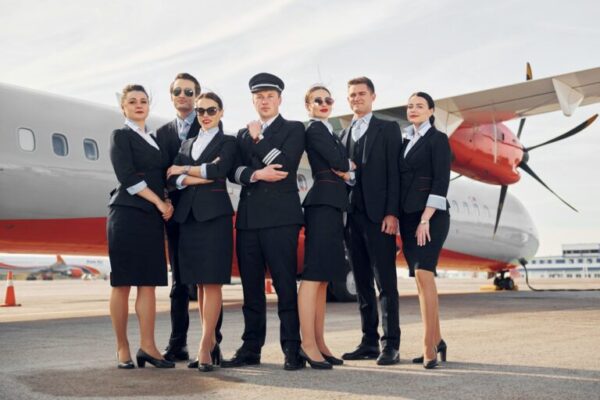
Uniform requirements vary significantly across industries, but few roles place as many demands on a garment as cabin crew. While passengers often notice the appearance of an airline uniform, the real challenge lies in how the garment performs throughout a working day.
Cabin crew members spend long hours standing, walking through aircraft cabins, assisting passengers, handling luggage, operating safety equipment, and moving between different climates and time zones. A fabric that works well in a traditional office environment may struggle to perform under these conditions.
This is why cabin crew uniforms are often developed using different fabric performance standards than many other types of corporate uniforms.
Cabin Crew Spend Long Hours in Uniform
A typical cabin crew shift can extend well beyond standard office hours.
Depending on the route and airline operation, employees may spend:
- Several hours on the ground before departure
- Long periods inside the aircraft cabin
- Time in transit between destinations
- Additional hours completing post-flight responsibilities
Unlike many customer-facing roles, cabin crew often have limited opportunities to change garments during their shift.
As a result, fabric performance must remain consistent for extended periods of wear.
Wrinkle Resistance Is a Major Requirement
Aircraft cabins present unique challenges for garments.
Crew members frequently sit, stand, bend, reach, and move through narrow aisles. These repetitive movements can quickly create creasing in fabrics that are not designed for airline environments.
For this reason, many aviation uniforms prioritise fabrics with strong wrinkle resistance.
This helps maintain:
- Professional appearance
- Consistency across crew members
- Reduced maintenance requirements
- Better presentation throughout long flights
The objective is not simply to look presentable during boarding, but to maintain that appearance until the end of the shift.
Temperature Changes Affect Fabric Performance
One of the less obvious challenges facing cabin crew is constant exposure to different temperatures.
A single shift may involve:
- High outdoor temperatures during boarding
- Air-conditioned airport terminals
- Aircraft cabin environments
- Different climate conditions upon arrival
Fabrics used in cabin crew uniforms must perform across these changing conditions without becoming uncomfortable or restrictive.
This is one reason airlines often pay close attention to fabric composition during uniform development.
Breathability Improves Comfort During Long Flights
Comfort is a significant factor in cabin crew uniform design.
Employees spend much of their shift moving throughout the aircraft while assisting passengers and carrying out operational duties.
Breathable fabrics help improve comfort by:
- Allowing air circulation
- Reducing heat retention
- Supporting long-term wearability
- Improving overall comfort during extended shifts
For airlines operating in warmer regions, breathable fabric selection becomes even more important.
Fabric Weight Must Be Carefully Considered
A heavier fabric may appear durable, but it is not always the best choice for airline uniforms.
Excessively heavy fabrics can:
- Restrict movement
- Increase heat retention
- Reduce comfort during long shifts
On the other hand, fabrics that are too lightweight may struggle to maintain structure or withstand repeated use.
When developing aviation uniforms, fabric weight is typically evaluated alongside:
- Durability requirements
- Climate considerations
- Garment structure
- Employee comfort
The objective is to achieve reliable performance rather than simply selecting the heaviest or lightest material available.
Durability Remains Essential
Cabin crew uniforms are worn frequently and laundered regularly.
As a result, fabrics must withstand:
- Repeated washing
- Frequent use
- Daily movement
- Long operational cycles
Poor fabric performance can lead to:
- Colour fading
- Shape distortion
- Excessive wear
- Inconsistent appearance across teams
This is why airlines often prioritise fabrics that maintain their appearance over extended periods rather than focusing solely on initial presentation.
Stretch and Mobility Support Daily Tasks
Cabin crew are constantly moving throughout their shift.
Tasks often include:
- Reaching overhead compartments
- Assisting passengers
- Operating aircraft equipment
- Handling service carts
- Conducting safety demonstrations
Uniforms must accommodate these movements comfortably.
Modern cabin crew uniforms often incorporate fabric constructions that improve flexibility while maintaining a professional appearance.
Mobility has become increasingly important as airlines place greater emphasis on employee comfort and functionality.
Consistency Across Large Airline Teams
Airlines often manage hundreds or thousands of employees across multiple routes and locations.
Uniform fabrics must perform consistently across all crew members to maintain a cohesive appearance.
This requires careful consideration of:
- Colour consistency
- Fabric availability
- Long-term sourcing capability
- Repeat production quality
For large-scale aviation uniform programs, fabric continuity is often just as important as initial design.
Maintenance Requirements Influence Fabric Selection
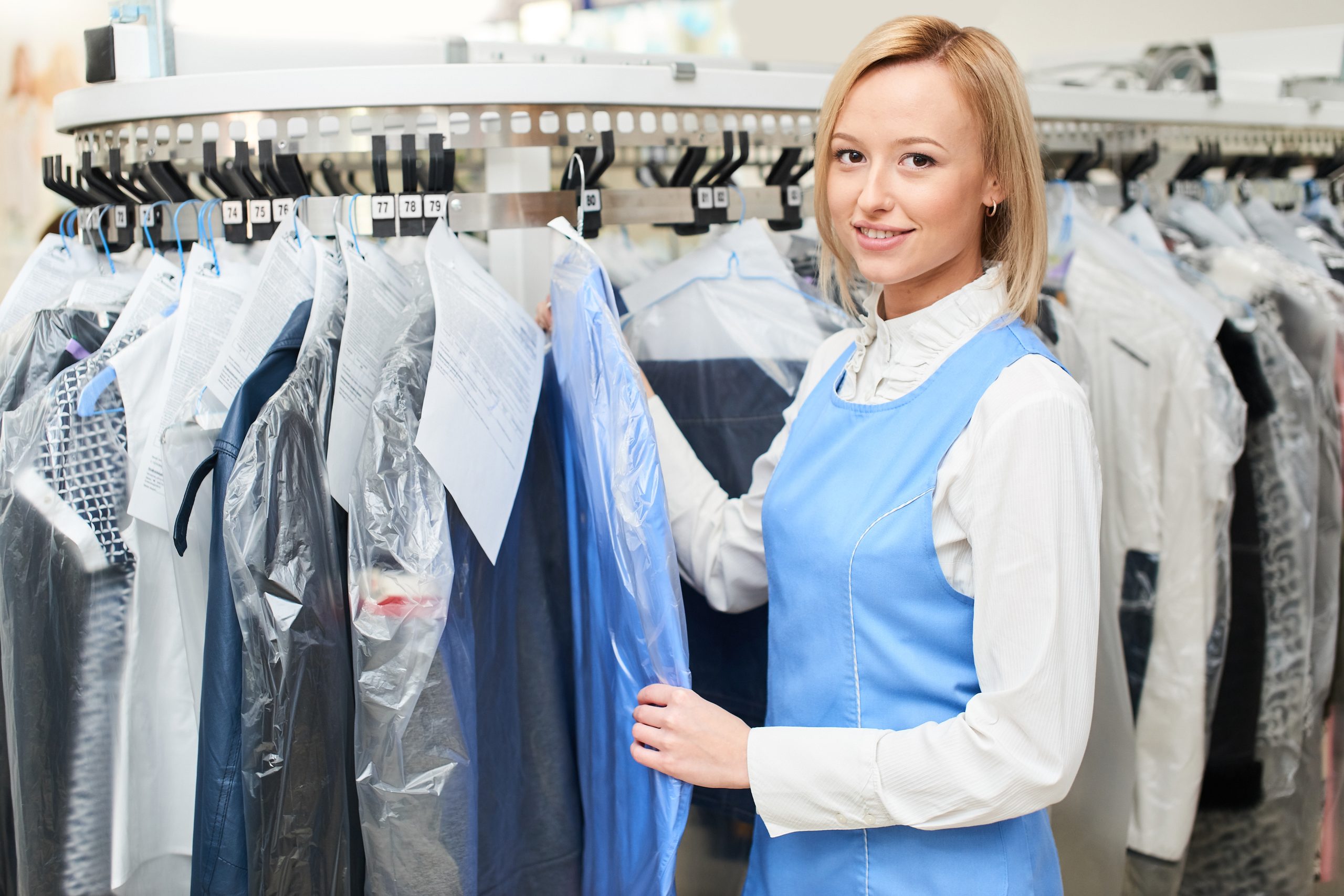
Airlines must also consider the operational side of uniform management.
Fabrics that require excessive maintenance can increase costs and create challenges for employees.
Many airlines therefore prioritise materials that offer:
- Easy care properties
- Reliable colour retention
- Reduced ironing requirements
- Consistent appearance after laundering
These practical considerations influence fabric selection as much as visual appearance.
Fabric Performance Directly Supports Airline Operations
The success of a cabin crew uniform is often determined by how it performs after hundreds of hours of wear rather than how it appears during launch.
Airlines increasingly evaluate fabrics based on:
- Comfort
- Durability
- Wrinkle resistance
- Breathability
- Ease of maintenance
- Long-term consistency
This approach helps ensure that uniforms continue to support employees throughout the lifecycle of the program.
Conclusion
Cabin crew uniforms operate under very different conditions than traditional corporate attire. Long shifts, constant movement, varying temperatures, frequent laundering, and high presentation standards all place significant demands on fabrics.
This is why airlines often adopt specialised fabric performance standards when developing cabin crew uniforms and broader aviation uniform programs.
By selecting fabrics based on operational requirements rather than appearance alone, airlines can create uniform programs that remain comfortable, durable, and consistent throughout daily operations.
FAQs
1. How does AttireCorp select fabrics for cabin crew uniforms?
AttireCorp evaluates factors such as flight duration, climate exposure, garment durability, wrinkle resistance, comfort, and maintenance requirements when developing cabin crew uniforms and aviation uniforms for airline operations.
2. What fabric characteristics are most important for aviation uniforms?
Airlines typically prioritise breathability, wrinkle resistance, durability, colour retention, ease of maintenance, and mobility when selecting fabrics for aviation uniform programs.
3. Can AttireCorp support large-scale cabin crew uniform rollouts?
Yes. AttireCorp supports airlines and aviation operators with uniform design, fabric sourcing, sampling, sizing programs, manufacturing, and large-scale rollout management for cabin crew uniforms and airline ground staff uniforms.
4. How does AttireCorp ensure consistency across aviation uniform programs?
AttireCorp maintains approved fabric standards, colour specifications, garment construction guidelines, and quality control processes to ensure consistency across repeat orders and expanding airline teams.
5. Does AttireCorp provide both cabin crew and ground staff uniform solutions?
Yes. AttireCorp develops complete aviation uniform programs, including cabin crew uniforms, airline ground staff uniforms, customer service uniforms, operational apparel, and management uniforms tailored to different aviation roles.
