

When businesses evaluate industrial workwear, attention is often given to fabric selection, garment construction, safety requirements, and durability. However, one factor that has a significant impact on garment lifespan is often overlooked: laundering.
Industrial workwear is not exposed to the same washing conditions as everyday clothing. In many industries, garments undergo frequent commercial laundering processes involving higher temperatures, stronger detergents, specialised chemicals, and intensive drying methods.
Over time, these processes affect how workwear looks, feels, and performs. Understanding the relationship between laundering and garment performance helps organisations make better decisions when selecting fabrics, planning replacement cycles, and managing workforce uniform programs.
Industrial Laundering Places Significant Stress on Garments
Unlike domestic washing, industrial laundering is designed to process large volumes of garments efficiently while meeting hygiene and operational requirements.
Depending on the industry, workwear may be washed:
- Daily
- Several times per week
- After every shift
- According to strict compliance requirements
Throughout this process, garments are exposed to:
- High washing temperatures
- Commercial detergents
- Mechanical agitation
- Pressing equipment
- Industrial drying systems
These conditions gradually affect fabric performance and garment construction.
Colour Retention Changes Over Time
One of the first visible effects of repeated laundering is colour loss.
While some fading is expected throughout a garment’s lifecycle, poor-quality fabrics may lose colour significantly faster.
This creates challenges for businesses because inconsistent colour can make uniforms appear older than they actually are.
In large workforce environments, colour variation can result in:
- Inconsistent employee presentation
- Difficulty maintaining brand standards
- Uneven appearance across teams
When selecting industrial uniforms, colour fastness testing is often an important part of fabric evaluation.
Fabric Strength Gradually Reduces
Every wash cycle places stress on fibres.
Over time, repeated laundering can reduce fabric strength, particularly in garments exposed to demanding working conditions.
Areas commonly affected include:
- Knees
- Elbows
- Seat panels
- Pocket openings
- High-friction zones
This is one reason why some workwear fabrics perform significantly better than others over extended periods.
The lifespan of a garment is often determined by how well the fabric withstands both workplace conditions and repeated laundering.
Shrinkage Can Affect Fit Consistency
Garment fit plays a major role in employee comfort and presentation.
Certain fabrics are more susceptible to shrinkage than others, particularly if they have not been properly tested before production.
Even minor shrinkage can affect:
- Sleeve length
- Trouser length
- Overall garment fit
- Employee comfort
For organisations managing large teams, inconsistent sizing caused by shrinkage can create additional replacement and inventory challenges.
This is why many experienced uniform manufacturers conduct wash testing before approving fabrics for large-scale production.
Stitching and Construction Are Tested With Every Wash
Fabric is only one part of garment performance.
Repeated laundering also affects:
- Thread strength
- Seam integrity
- Embroidery durability
- Fastening systems
- Reinforcement points
Poor construction may not be obvious when a garment is new, but it often becomes visible after multiple wash cycles.
In industrial environments, stitching failures frequently appear before fabric failure if construction standards are inadequate.
Flame Resistant Clothing Requires Additional Consideration
For organisations using flame-resistant clothing, laundering becomes even more important.
The effectiveness of certain FR garments depends on proper maintenance throughout their lifespan.
Businesses using FR uniforms should ensure:
- Garments are laundered according to manufacturer guidelines
- Damaged garments are replaced promptly
- Inspection procedures are in place
- Laundering processes do not compromise performance
Understanding how protective garments respond to industrial laundering is a critical part of maintaining workplace safety.
Fabric Blends Often Perform Differently
Not all fabrics respond to laundering in the same way.
For example:
Cotton-Rich Fabrics
May provide excellent comfort but can be more susceptible to shrinkage and wear depending on construction.
Polycotton Blends
Often provide improved durability, shape retention, and colour stability over extended laundering cycles.
Technical Workwear Fabrics
May offer additional performance benefits depending on the working environment and application.
Selecting the right fabric requires evaluating how the garment will perform after repeated use rather than focusing solely on its initial appearance.
Garment Lifespan Should Be Considered During Procurement
Many organisations compare workwear options based on purchase price.
However, the true cost of a garment is often determined by how long it remains serviceable.
Factors influencing lifespan include:
- Fabric quality
- Construction standards
- Work environment
- Laundering frequency
- Maintenance procedures
A garment that lasts twice as long may provide significantly better value than a lower-cost alternative that requires frequent replacement.
Testing Helps Predict Long-Term Performance
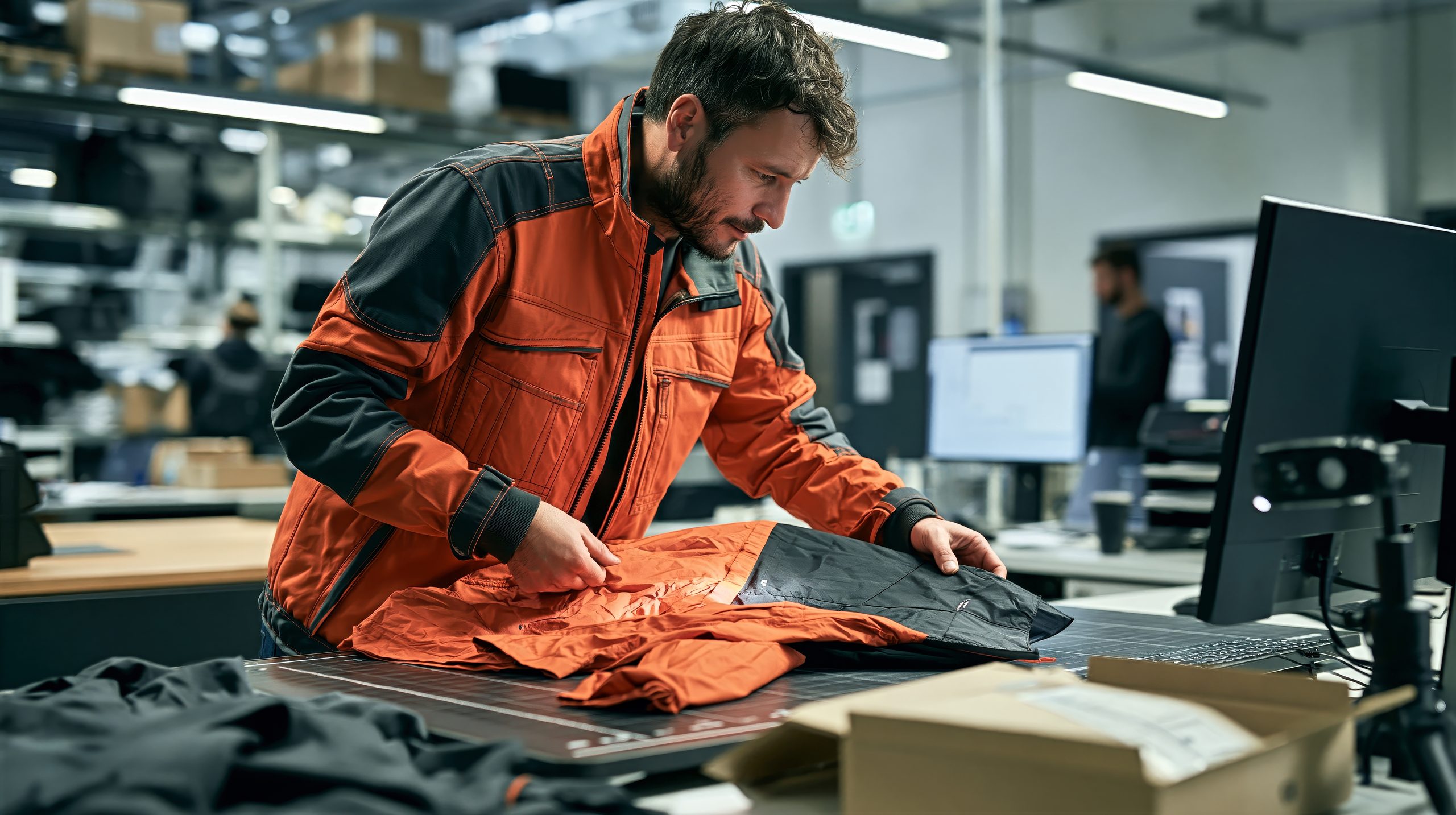
One of the most effective ways to evaluate workwear is through testing.
Before approving fabrics for large workforce programs, many organisations conduct:
- Wash testing
- Colour fastness testing
- Shrinkage testing
- Abrasion testing
- Wear trials
These processes help identify potential issues before large-scale production begins.
For businesses investing in custom workwear, testing provides valuable insight into how garments will perform throughout their lifecycle.
Laundering Data Can Improve Uniform Management
Large organisations increasingly track garment performance over time.
This information helps identify:
- Average garment lifespan
- High-wear departments
- Replacement patterns
- Fabric performance trends
Using this data allows businesses to make more informed decisions when reviewing future industrial workwear purchases and replacement strategies.
Conclusion
Industrial laundering has a direct impact on how workwear performs over time. Colour retention, fabric strength, garment fit, stitching integrity, and overall durability are all influenced by repeated washing and maintenance processes.
For organisations managing large workforce uniform programs, understanding these effects helps improve fabric selection, replacement planning, and long-term cost management.
The most successful workwear programs are built around garments that continue to perform after repeated laundering—not simply those that look good when they are first issued.
FAQs
1. How does AttireCorp evaluate workwear fabrics for industrial laundering?
AttireCorp assesses factors such as wash durability, colour retention, shrinkage resistance, fabric strength, and long-term performance before recommending fabrics for industrial workwear, industrial uniforms, and workforce apparel programs.
2. Can AttireCorp develop workwear programs for organisations with industrial laundering requirements?
Yes. AttireCorp works with organisations across manufacturing, logistics, engineering, construction, energy, and industrial sectors to develop custom workwear solutions designed for demanding laundering and operational environments.
3. How does AttireCorp help businesses reduce workwear replacement costs?
By selecting appropriate workwear fabrics, conducting performance evaluations, and developing durable garment specifications, AttireCorp helps organisations improve garment lifespan and reduce unnecessary replacement frequency.
4. Does AttireCorp supply flame-resistant clothing for industrial operations?
Yes. AttireCorp supplies flame-resistant clothing, FR uniforms, and specialised safety garments for industries where thermal hazards, electrical risks, or regulatory requirements necessitate additional protection.
5. What should businesses consider when selecting an industrial workwear supplier?
Businesses should evaluate fabric expertise, garment testing processes, quality control systems, production capability, and long-term support. AttireCorp supports organisations with scalable industrial workwear programs designed around operational requirements and workforce needs.
