

Uniforms play a significant role in the aviation industry. They help passengers identify staff quickly, support operational requirements, reinforce brand standards, and ensure employees remain comfortable throughout long shifts.
However, aviation uniforms are far more complex than standard corporate attire. Cabin crew, ground staff, engineering teams, customer service personnel, and operational supervisors all work in different environments and face different demands throughout the day.
For airlines, airport operators, and aviation service providers investing in aviation uniforms in the UAE, understanding these requirements is essential when developing a uniform program that can perform consistently across a large workforce.
Different Roles Require Different Uniform Solutions
One of the most common mistakes in aviation uniform planning is treating all employee groups as though they have similar requirements.
In reality, the needs of a cabin crew member differ significantly from those of a ground operations employee.
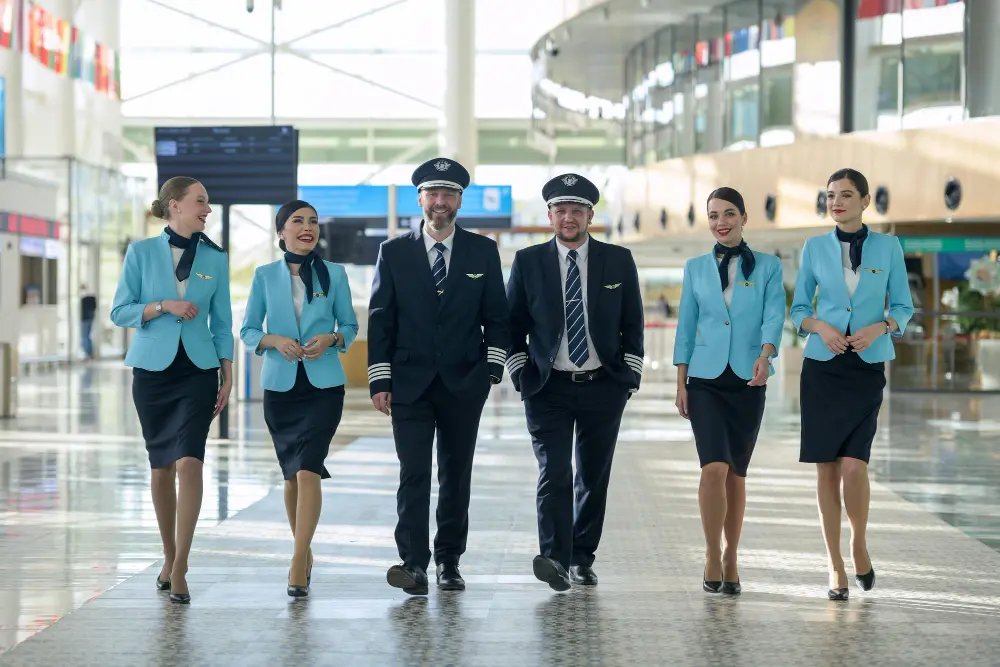
Cabin crew uniforms typically prioritise:
- Professional appearance
- Comfort during extended flights
- Wrinkle resistance
- Ease of movement
- Consistent presentation across international routes
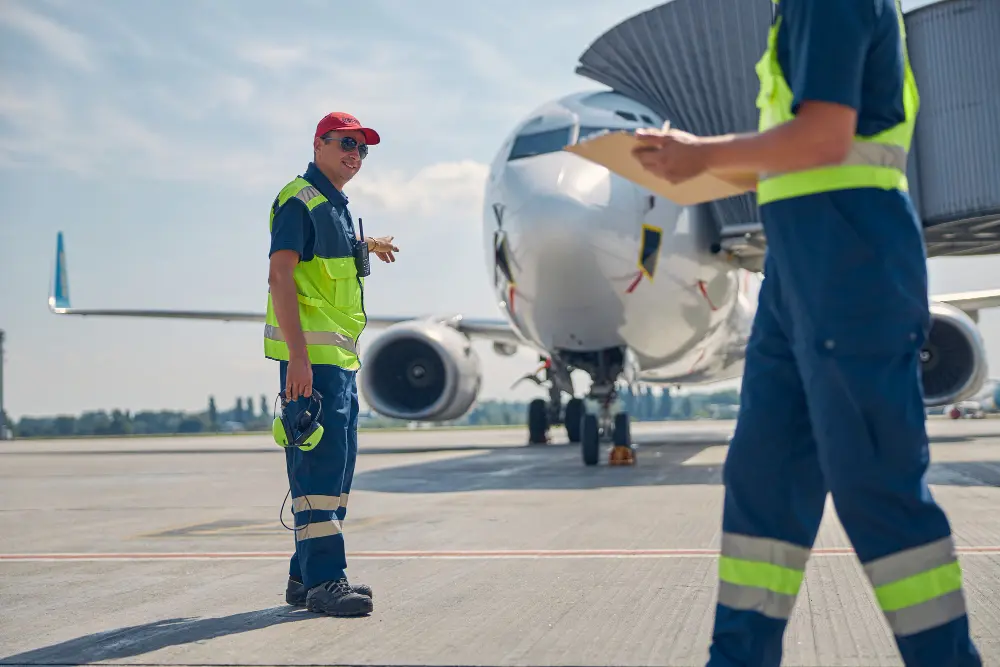
Ground staff uniforms often require:
- Greater durability
- Weather resistance
- High visibility where required
- Practical pocket placement
- Fabrics suited to outdoor environments
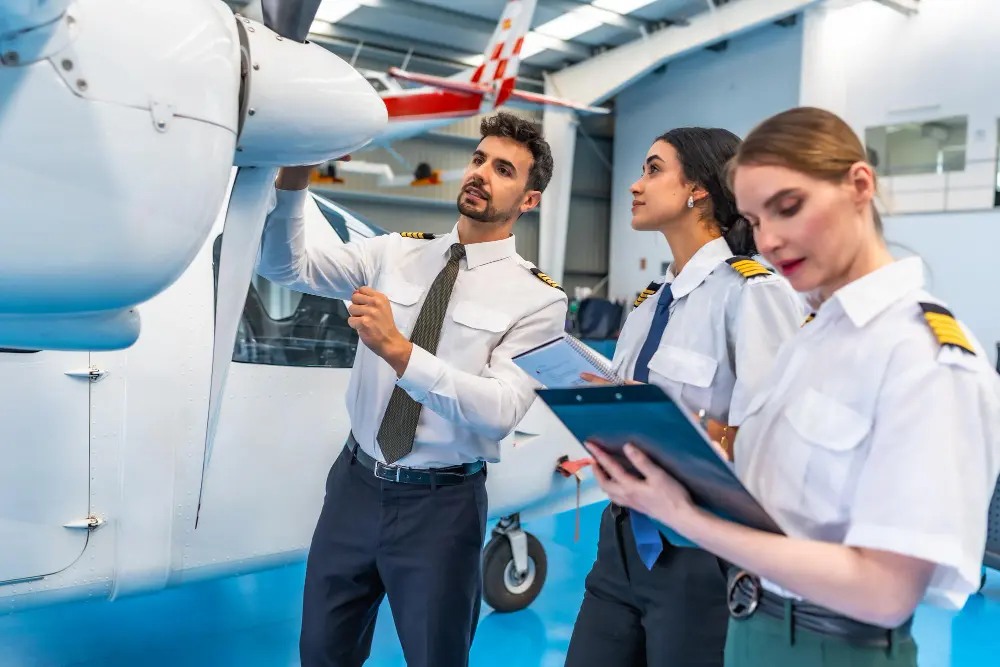
Engineering and maintenance teams may require specialised industrial workwear or protective garments depending on their responsibilities.
A successful aviation uniform program starts with understanding how each employee group works rather than applying a single solution across all departments.
Fabric Selection Has a Direct Impact on Performance
Airline employees regularly move between different environments.
A ground staff member may spend part of the day outdoors on the tarmac and part of the day inside an air-conditioned terminal. Cabin crew work in pressurised cabins, often for long periods with limited opportunities to change garments.
Because of this, fabric selection becomes one of the most important decisions in aviation uniform design.
Common priorities include:
- Breathability
- Durability
- Colour retention
- Wrinkle resistance
- Comfort during long shifts
- Ease of maintenance
When sourcing aviation uniforms in the UAE, organisations often look for fabrics that can perform well in high temperatures while maintaining a professional appearance throughout the day.
Brand Consistency Matters Across Every Location
Passengers often form their first impression of an airline through its staff.
Uniforms contribute to that experience by creating a consistent visual identity across airports, routes, and customer touchpoints.
This requires careful control over:
- Colours
- Embroidery standards
- Logo placement
- Garment styling
- Accessories
Large airlines frequently operate across multiple countries and airports, making consistency a significant challenge. Working with experienced uniform manufacturers in the UAE helps ensure that future production runs maintain the same specifications as the original rollout.
Comfort Influences Employee Performance
Airline employees spend long hours standing, walking, assisting passengers, handling equipment, and moving through airports.
A garment that looks good during a fitting session may not perform well during a ten-hour shift.
This is why many organisations now place greater emphasis on:
- Ergonomic garment design
- Stretch where required
- Appropriate garment weight
- Flexible movement around shoulders and arms
- Comfortable waist construction
For customer-facing employees, comfort can directly influence confidence and presentation throughout the working day.
Ground Operations Require Additional Practical Features
Ground staff uniforms often operate under very different conditions compared to cabin crew attire.
Employees working on the ramp, baggage handling areas, or operational zones may face:
- Heat exposure
- Wind
- Dust
- Physical activity
- Extended outdoor shifts
As a result, airline ground staff uniforms often require features such as:
- Reinforced seams
- Durable fabrics
- High-visibility detailing
- Practical storage pockets
- Easy-care materials
The focus is on maintaining durability without creating unnecessary weight or restricting movement.
Managing Uniforms Across Large Aviation Teams
Airlines and airport operators often employ hundreds or thousands of people.
Managing measurements, sizing, replacements, and inventory becomes a major operational task.
Successful aviation uniform programs typically include:
- Structured measurement processes
- Digital sizing records
- Defined replacement cycles
- Inventory planning
- Consistent reorder systems
Working with experienced uniform suppliers in the UAE helps organisations manage these processes more efficiently, particularly during expansion, recruitment drives, or uniform redesign projects.
Planning for Future Growth
Uniform programs should support future growth rather than only current requirements.
When airlines expand routes, open new bases, or increase staffing levels, additional garments must be produced quickly while maintaining consistency.
This is why procurement teams often prioritise suppliers who can provide:
- Long-term fabric availability
- Repeat production capability
- Consistent quality standards
- Scalable manufacturing capacity
Choosing the right supplier at the beginning of a project can prevent significant challenges later.
Conclusion
Aviation uniforms must meet a unique combination of requirements. They need to represent the airline professionally, support employees during long shifts, perform across different environments, and remain consistent across large teams.
For organisations sourcing aviation uniforms in the UAE, successful programs are built around role-specific requirements, carefully selected fabrics, accurate sizing systems, and reliable long-term supply.
When these factors are considered early, uniform programs become easier to manage and more effective for both employees and the organisation.
FAQs
1. What fabrics are commonly used for aviation uniforms?
Aviation uniforms often use polyester blends, wool blends, stretch fabrics, and performance textiles that offer durability, wrinkle resistance, and comfort during long shifts.
2. Why are aviation uniforms different from standard corporate uniforms?
Aviation uniforms must perform in demanding operational environments while maintaining a professional appearance. Employees often work long hours, move frequently, and operate across different climate conditions.
3. What should airlines consider when designing ground staff uniforms?
Ground staff uniforms should prioritise durability, visibility, comfort, weather suitability, and ease of movement, particularly for employees working outdoors.
4. How do airlines maintain consistency across large uniform programs?
Many airlines use standardised specifications, approved fabrics, digital sizing records, and long-term partnerships with experienced uniform suppliers.
5. How often should aviation uniforms be replaced?
Replacement cycles vary depending on garment type, usage frequency, and operational conditions. Most organisations establish planned replacement schedules rather than replacing uniforms only when they become worn.
