

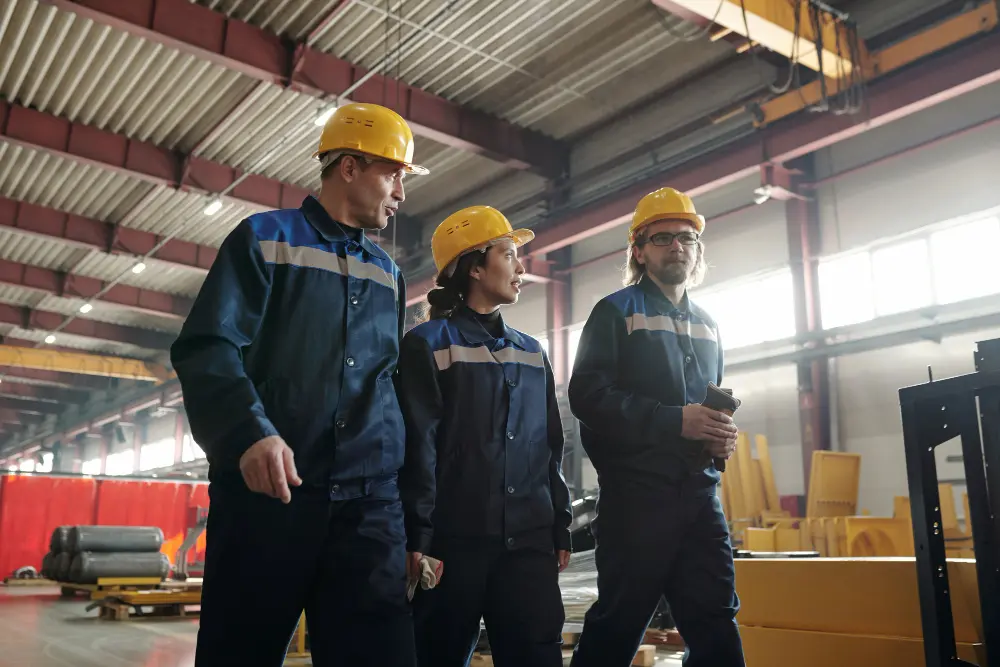
Industrial workwear is expected to do far more than identify employees. In sectors such as construction, manufacturing, logistics, utilities, oil and gas, and facility management, garments are exposed to demanding conditions every day.
Heat, dust, physical abrasion, frequent washing, and long working hours all place significant demands on clothing. The wrong fabric can lead to discomfort, premature wear, higher replacement costs, and reduced employee compliance with uniform policies.
For organisations investing in industrial workwear in the UAE, fabric selection is one of the most important decisions in the entire uniform program. While design and appearance matter, fabric performance ultimately determines how well garments hold up in real working environments.
Why Fabric Selection Matters More Than Many Businesses Realise
When companies evaluate workwear, the focus often falls on garment style, colour, or branding. However, the fabric is what determines how the garment performs over months or years of use.
A fabric that performs well in an office environment may struggle in industrial settings where employees are:
- Working outdoors for extended periods
- Frequently bending, lifting, and moving
- Exposed to dust and dirt
- Subjecting garments to regular industrial laundering
- Working in high-temperature environments
Choosing the wrong fabric can increase replacement frequency and create ongoing procurement challenges.
Understanding Cotton and Polycotton Fabrics
Two of the most commonly used materials in industrial workwear are cotton and polycotton blends.
Cotton
Cotton remains popular because of its comfort and breathability.
Advantages include:
- Good airflow
- Soft feel against the skin
- Suitable for warm environments
- Comfortable for extended wear
However, cotton can also have limitations:
- Higher shrinkage potential
- Longer drying times
- Reduced durability compared to some blended fabrics
Polycotton
Polycotton combines cotton with polyester to improve durability.
Benefits include:
- Better resistance to wear
- Faster drying times
- Improved wrinkle resistance
- Longer garment lifespan
Many organisations choose polycotton fabrics because they provide a practical balance between comfort and durability for everyday industrial use.
Fabric Weight and Why It Matters
Fabric weight is often measured in GSM (grams per square metre).
A common misconception is that heavier fabrics are always better. In reality, fabric weight should be selected according to the work environment.
Lighter fabrics may offer:
- Better airflow
- Greater comfort in hot climates
- Reduced heat retention
Heavier fabrics may provide:
- Increased durability
- Better abrasion resistance
- Greater structural strength
When selecting workwear fabrics, companies should consider both climate conditions and job requirements rather than focusing solely on fabric weight.
Abrasion Resistance in High-Wear Environments
Many industrial roles place constant stress on garments.
Common wear zones include:
- Knees
- Elbows
- Pocket openings
- Cuffs
- Seat areas
- Seam junctions
In these environments, fabric durability becomes a major factor.
Experienced workwear suppliers in the UAE often recommend fabrics and garment constructions that can withstand repeated friction and daily physical activity.
This helps reduce garment failures and extends replacement cycles.
Breathability in Hot Working Conditions

Heat management is a major consideration when sourcing industrial workwear in the UAE.
Employees who become uncomfortable due to excessive heat are more likely to modify how garments are worn or avoid using them correctly.
Breathable fabrics help improve comfort by allowing air circulation and reducing heat retention.
Factors that influence breathability include:
- Fibre composition
- Fabric construction
- Garment design
- Fabric weight
For outdoor industries, comfort is closely linked to workforce productivity and compliance.
Understanding Flame Resistant Clothing Requirements
Certain industries require specialised protective garments.
Employees working around electrical hazards, heat sources, fuel systems, or combustible materials may require flame resistant clothing in the UAE.
Before ordering FR uniforms, organisations should understand:
- The specific hazards employees face
- Applicable safety standards
- Whether treated or inherent FR fabrics are more suitable
- Maintenance requirements throughout the garment lifecycle
Not every industrial workforce requires flame resistant clothing, but where hazards exist, fabric selection becomes a safety-critical decision.
Industrial Laundering and Fabric Performance
Workwear is often subjected to far more aggressive washing conditions than standard clothing.
Repeated laundering can affect:
- Colour retention
- Fabric strength
- Shrinkage
- Stitching integrity
- Garment appearance
This is why many uniform manufacturers in the UAE conduct fabric testing before bulk production begins.
Selecting fabrics that perform well after repeated washing helps maintain consistency across the workforce and reduces long-term replacement costs.
Looking Beyond Fabric Alone
While fabric selection is important, garment construction also plays a major role in performance.
Two garments made from the same fabric can perform very differently depending on:
- Pattern design
- Seam construction
- Reinforcement methods
- Pocket design
- Stress-point stitching
When evaluating industrial workwear, organisations should assess the complete garment rather than fabric specifications alone.

Conclusion
The effectiveness of industrial workwear depends heavily on the fabric chosen at the beginning of the process. Comfort, durability, safety, maintenance requirements, and garment lifespan are all influenced by this decision.
For organisations sourcing industrial workwear in the UAE, selecting fabrics based on actual working conditions rather than assumptions helps improve employee comfort, reduce replacement costs, and support long-term operational efficiency.
The most successful workwear programs start with understanding how garments will be used and choosing materials that can perform under those conditions consistently.
FAQs
1. How does AttireCorp help businesses choose the right fabrics for industrial workwear?
AttireCorp evaluates factors such as climate conditions, job requirements, garment lifespan expectations, and safety considerations before recommending suitable industrial workwear fabrics. This helps organisations select garments that perform reliably in demanding environments while reducing unnecessary replacement costs.
2. Can AttireCorp supply industrial workwear for large teams across multiple locations?
Yes. AttireCorp supports large-scale uniform programs for organisations operating across multiple sites. Through structured production planning, sizing management, and inventory coordination, businesses can maintain consistency across their industrial workwear and employee uniform programs.
3. Does AttireCorp provide flame resistant clothing for high-risk industries?
Yes. AttireCorp supplies flame resistant clothing, FR uniforms, and other specialised safety workwear solutions for industries such as oil and gas, utilities, manufacturing, and engineering where additional protection may be required.
4. What industries does AttireCorp provide industrial workwear for?
AttireCorp supports organisations across construction, manufacturing, logistics, transportation, facilities management, utilities, aviation, energy, and other sectors requiring durable industrial uniforms and custom workwear solutions.
5. What should businesses look for when selecting an industrial workwear supplier?
Businesses should assess fabric expertise, production capability, quality control processes, replacement support, and long-term consistency. Working with an experienced provider such as AttireCorp helps ensure that industrial workwear, safety workwear, and related uniform programs remain scalable as organisations grow.
