
When a new hotel is preparing to open, uniforms are often viewed as one of the final items on the checklist.
In reality, they should be considered much earlier.
Hotel openings involve hundreds of moving parts—construction timelines, recruitment, training, procurement, brand implementation, and operational testing. Uniforms sit at the intersection of many of these activities. Delaying decisions around uniform design and procurement can create unnecessary pressure during the final stages of a project.
For hospitality brands investing in hospitality uniforms in Saudi Arabia, early planning helps avoid delays, ensures consistency across departments, and allows enough time to develop garments that work in real operating conditions.
Uniform Requirements Start With Department Planning
One of the first mistakes hotel operators make is treating uniforms as a single category.
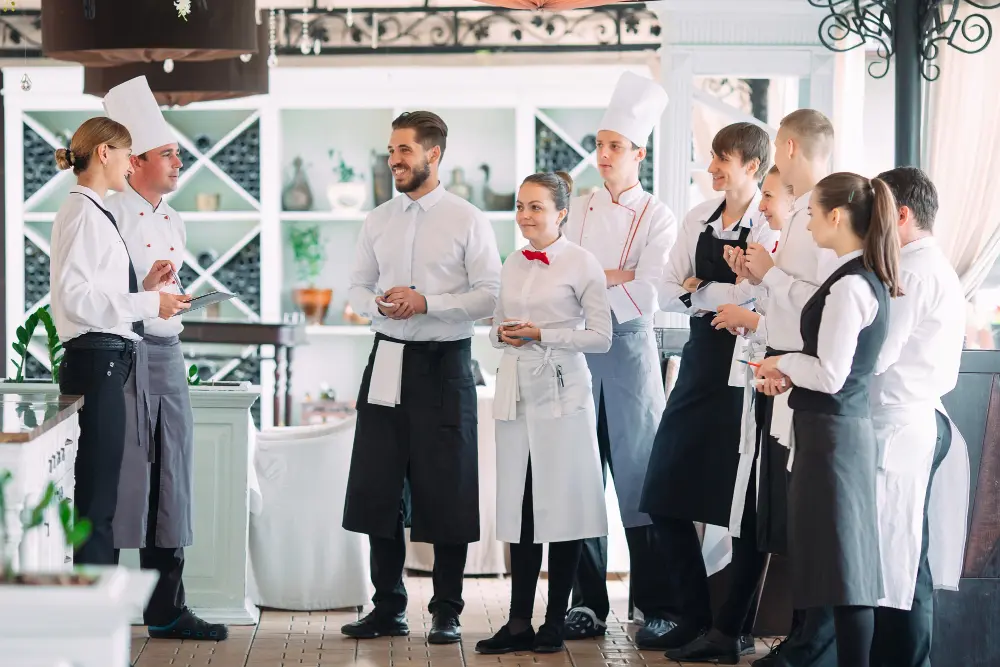
A hotel may have:
- Front office teams
- Concierge staff
- Housekeeping departments
- Restaurant service teams
- Kitchen staff
- Spa personnel
- Engineering and maintenance teams
- Security teams
- Management staff
Each role performs different tasks and operates in different environments.
A concierge interacting with guests throughout the day has very different uniform requirements from a housekeeping attendant pushing carts across multiple floors or a kitchen team working in high-temperature environments.
Before design discussions begin, hotel operators should map every department and understand how each uniform will be used.
Fabric Selection Should Reflect Working Conditions
Saudi Arabia’s climate creates unique challenges for hospitality businesses.
While many hotel uniforms spend most of their time indoors, employees frequently move between indoor and outdoor environments throughout the day.
This is why fabric selection requires careful consideration.
For many projects, key priorities include:
- Breathability
- Durability
- Ease of maintenance
- Colour retention
- Shape retention after repeated washing
The best fabrics for hotel staff uniforms in Riyadh are not always the most expensive. They are the ones that continue to perform consistently after months of daily wear and industrial laundering.
Choosing fabrics based solely on appearance often leads to higher replacement costs later.
Brand Standards Need to Be Translated Into Wearable Uniforms
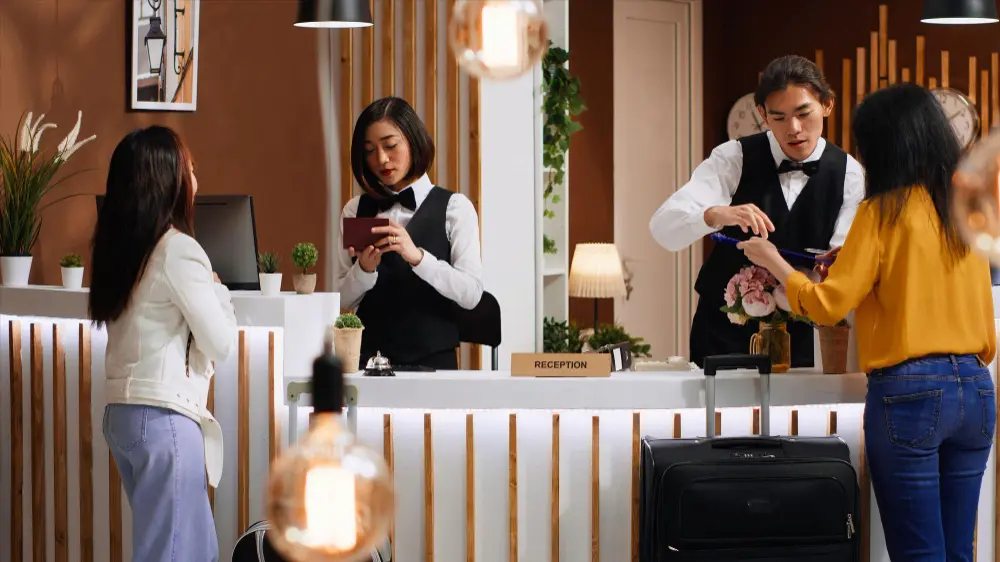
Many hotel brands invest significant effort into their visual identity.
The challenge is translating those guidelines into uniforms that employees can comfortably wear for entire shifts.
This involves decisions around:
- Colour palettes
- Fabric textures
- Logo application
- Garment structure
- Seasonal requirements
Successful custom branded uniforms in Saudi Arabia reflect the hotel’s positioning while remaining practical for daily operations.
A uniform may look excellent in a presentation, but if it restricts movement or creates discomfort during long shifts, it will quickly become an operational issue.
Sizing Systems Need Attention Earlier Than Most Hotels Expect
Sizing becomes one of the biggest challenges during hotel openings.
Large hospitality projects often involve:
- New hires joining at different stages
- International recruitment
- Employees with diverse body types
- Last-minute staffing changes
Without a structured sizing process, hotels frequently encounter:
- Incorrect uniform allocations
- Alteration delays
- Emergency reorders
- Increased opening costs
Establishing a sizing strategy early allows suppliers to plan production more efficiently and reduces disruptions closer to opening day.
Sampling and Wear Trials Should Never Be Rushed
Approving uniforms based solely on appearance can create problems after launch.
Before final production begins, hotels should conduct wear trials that evaluate:
- Comfort during long shifts
- Ease of movement
- Performance after washing
- Practicality during daily tasks
For example, a restaurant service uniform may look appropriate during a fitting session but reveal issues once employees begin carrying trays, moving between tables, and working extended shifts.
Wear testing often identifies problems that are impossible to spot during design reviews.
Production Timelines Must Align With Recruitment Timelines
One of the most common challenges during hotel openings is a mismatch between staffing schedules and uniform delivery schedules.
Uniform planning should account for:
- Recruitment phases
- Department onboarding dates
- Training periods
- Opening timelines
Working with experienced uniform suppliers in Saudi Arabia allows hotels to coordinate production and delivery around operational milestones rather than treating uniforms as a separate project.
The earlier this coordination begins, the smoother the opening process becomes.
Distribution Planning Is Often Overlooked
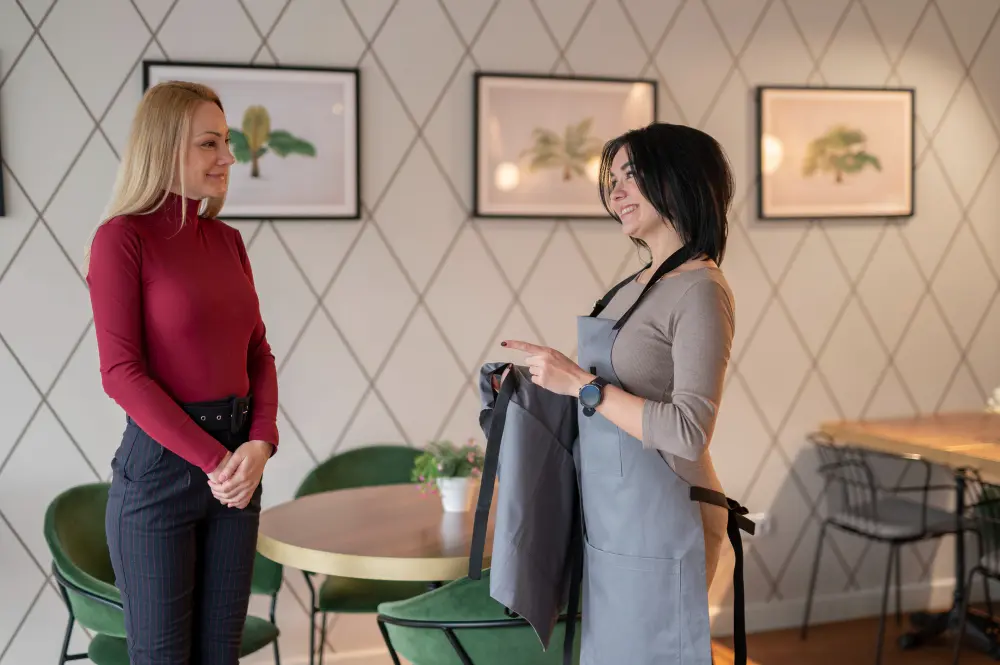
Producing uniforms is only part of the process.
Once garments arrive, they must be:
- Sorted by department
- Assigned by employee
- Distributed efficiently
- Tracked for future reorders
Large hotels can easily be managing hundreds of garments across multiple departments before opening day.
Without a structured distribution plan, significant time can be lost during final preparations.
The Most Successful Hotel Openings Treat Uniforms as an Operational Project
The strongest hotel uniform programs are not created a few weeks before opening.
They are planned alongside recruitment, operations, and brand implementation.
Early planning allows hospitality businesses to:
- Develop role-specific uniforms
- Conduct proper testing
- Establish sizing systems
- Coordinate production timelines
- Ensure consistent brand presentation from day one
For hotel operators, uniforms are one of the most visible elements of the guest experience. Giving them sufficient attention early in the project often prevents costly adjustments later.
FAQs
1. How does AttireCorp manage uniform planning for large hotel opening projects in Saudi Arabia?
AttireCorp follows a structured process that begins with department analysis, role mapping, fabric selection, design development, sizing management, sampling, production, quality control, and final distribution planning. This helps hotels coordinate uniform delivery with recruitment and operational timelines.
2. Can AttireCorp create different uniform collections for multiple departments within the same hotel?
Yes. AttireCorp develops department-specific solutions for front office, concierge, housekeeping, restaurant service, kitchen teams, spa staff, engineering departments, security personnel, and management teams. Each category is designed around the operational requirements of that role.
3. Does AttireCorp provide sizing support before hotel openings?
Yes. For large hospitality projects, AttireCorp can assist with measurement planning, size allocation systems, and workforce sizing management to reduce fitting issues and minimise last-minute alterations before opening.
4. Can AttireCorp produce custom branded uniforms that align with hotel brand guidelines?
Yes. AttireCorp develops custom branded uniforms in Saudi Arabia that incorporate brand colours, embroidery, trims, and design elements while ensuring garments remain practical for hospitality operations.
5. Why do hotels choose AttireCorp for hospitality uniform projects in Saudi Arabia?
Hotels work with AttireCorp because of its ability to manage the full uniform lifecycle—from consultation and design development to production, quality control, and large-scale rollout. This approach helps ensure consistency across departments and supports smooth hotel openings.
